Designing a Medical Device Study for the Evidence You Need
Start with the end in mind— Why clinical data strategy begins before the first subject, and before the EDC is built.
Engagement Snapshot
Engagement Type
Study Design Consulting / EDC Strategy / Biostatistics
Initial Situation
A sponsor needed confidence that collected data would ultimately support the intended analysis and regulatory decision.
Fuel Role
Protocol design input, biostatistics alignment, CRF and source design, EDC strategy and ongoing data review.
Outcome
A clinical evidence strategy aligned from protocol design through analysis—protecting every Analysis Viable Subject (AVS).
Start With the End in Mind
A successful clinical study begins with a simple question: what evidence do we need at the end to make a confident decision about this device? Designing backward from that decision means the protocol defines the evaluation, statistics defines how it can be assessed, CRFs and source materials translate requirements into consistent questions, the EDC structures and validates the information, and ongoing review confirms that the expected evidence is taking shape. When these activities are disconnected or introduced too late, completed subjects may still fail to support the intended analysis. The objective is not simply completion—it is to create Analysis Viable Subjects™ (AVS).
Understanding the Importance of Analysis Viable Subjects™ (AVS)
AVS is an extension of Fuel's Unified Intelligence philosophy. Before the first subject is enrolled, the study team should understand the ultimate scientific, statistical, regulatory and development decisions the study must support. The protocol, endpoints, visit schedule, data collection strategy, statistical populations, technology and operational processes can then be designed around producing decision-ready evidence.
Design the right study → Execute with precision → Generate decision-ready data → Maximize Analysis Viable Subjects.
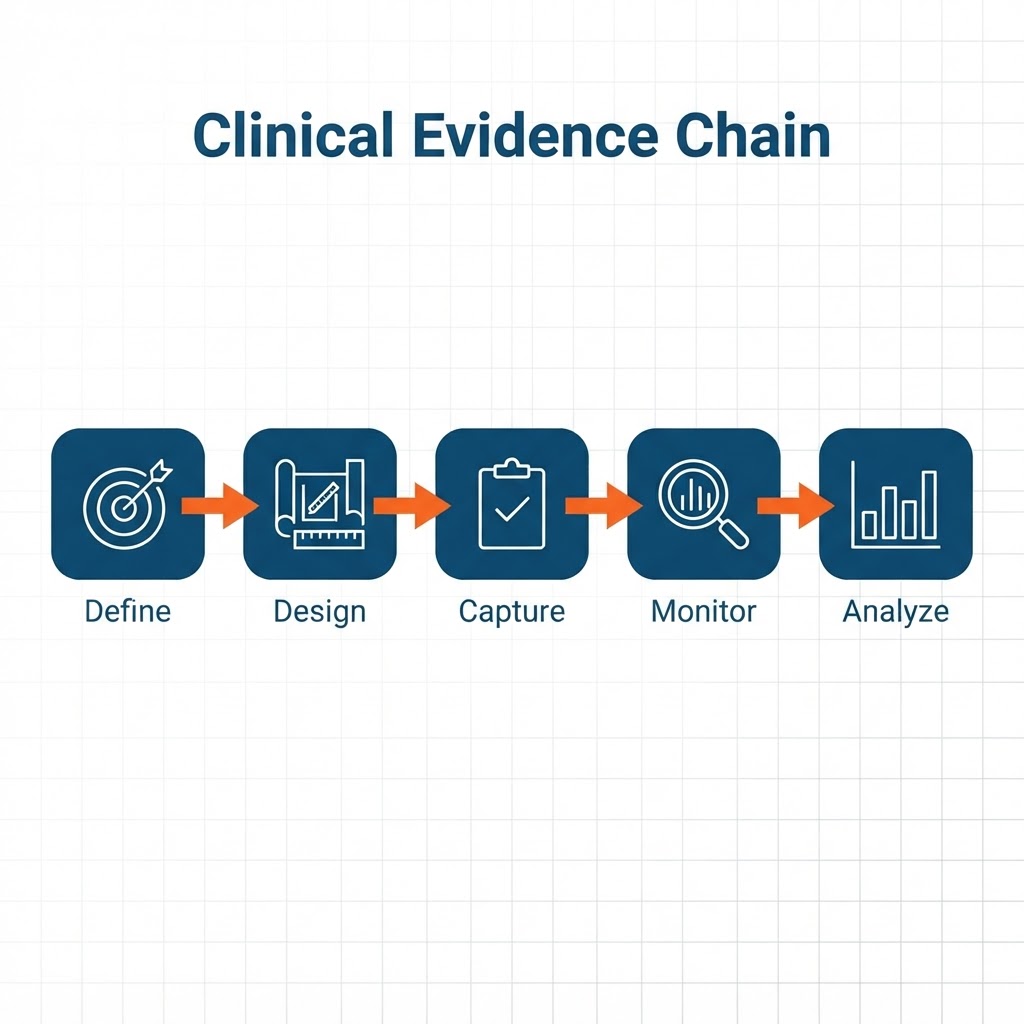
The Clinical Evidence Chain
1. Define
What must the study demonstrate?
2. Design
What evidence will answer it?
3. Capture
How will it be collected consistently?
4. Monitor
Are we generating the expected evidence?
5. Analyze
Can the dataset answer the question?
Design the Analysis Before Collecting the Data
Statistical input during design confirms that endpoints, sample size, assessment timing and analysis populations can support the research objectives. It also exposes dependencies early: which subjects are evaluable, which measurements are essential, how missing data will affect interpretation and which comparisons must be supported by the final dataset.
- Define evaluability: analysis populations, required data and intended outcomes.
- Plan for variability: missing assessments, timing windows, repeated measures and comparisons.
Biostatistics at the end can analyze the data available.
Biostatistics at the beginning helps ensure the right data will exist.
Source & CRF Design: Ask the Questions the Analysis Will Need
Clinical activity does not automatically become usable trial data. A clinician may understand from the medical record that a subject struggled with the device, required an adjustment or interrupted use. Unless the study specifies what must be documented and how, however, the details needed for analysis can remain unstructured, inconsistent or absent.
Fuel translates protocol requirements into consistent CRF questions and source guidance across sites and study staff. This sequence keeps the clinical meaning intact while giving every site the same questions, definitions and documentation expectations.
1. Observe
What happened, when and under what conditions?
2. Document
What action, adjustment or interruption followed?
3. Structure
How will the event become consistent, analyzable data?
EDC: More Than a Place to Enter Data
The EDC should operationalize the evidence strategy—not simply provide a compliant place to enter data. Standardized structures, controlled terminology, conditional fields and focused edit checks help prevent avoidable gaps, while listings, metrics and traceable changes give the study team visibility into data quality as the study progresses. The result is a database that shows whether the planned evidence is taking shape while the study is still underway.
- Structure and validate: standardized visits, terminology, required fields and edit checks.
- Support review: traceable changes, listings, metrics and study-level visibility.
Monitor the Evidence—Not Just Enrollment
Ongoing reviews can reveal missing assessments, inconsistent device-use documentation, event trends, protocol deviations, site differences and emerging quality concerns before database lock. Seeing these patterns early allows the team to distinguish isolated data issues from broader process or training needs.
This visibility supports timely investigation, clarification and corrective action while subjects are still being followed. It does not justify changing a study because an emerging result is undesirable; any modification must remain scientifically justified, appropriately controlled and documented.
Finding a pattern during the study creates an opportunity to act.
Finding it during final analysis may only create an explanation.
Fuel Clinical Approach
| Discipline | How Fuel Protects the Evidence |
|---|---|
| Protocol Design | Translated the clinical question into measurable, collectable evidence—defining endpoints, assessments, timepoints and evaluability, and protecting interpretation through device use, deviations and event documentation. |
| Biostatistics | Confirmed endpoints, sample size, assessment timing and analysis populations during design—exposing dependencies early rather than analyzing only the data available at the end. |
| Source & CRF Design | Translated protocol requirements into consistent CRF questions and source guidance across sites, keeping clinical meaning intact while giving every site the same definitions and expectations. |
| EDC Strategy | Operationalized the evidence strategy through standardized structures, controlled terminology, conditional fields and focused edit checks—not simply a compliant place to enter data. |
| Ongoing Monitoring | Reviewed missing assessments, device-use documentation, event trends and site differences before database lock, supporting timely investigation and corrective action. |
Key Actions
- Defined the evidence needed—endpoints, assessments, timepoints and evaluability—before design work began.
- Aligned biostatistics with analysis populations, required data and intended outcomes ahead of data collection.
- Translated protocol requirements into consistent CRF questions and source guidance across sites and study staff.
- Structured and validated the EDC with standardized visits, terminology, required fields and edit checks.
- Monitored emerging evidence—not just enrollment—to catch gaps while recovery was still possible.
Protecting the Study Data & Results: Analysis Viable Subjects
Enrolled Subject
Clinical effort and development investment begins.
Right Visits
Required assessments completed at defined timepoints.
Complete Context
Device use, events and deviations documented.
Quality Confirmed
Data reviewed, resolved and analysis-ready.
The earlier the alignment
The more options the study retains.
AVS Achieved
An Analysis Viable Subject reaches the end ready to analyze.
| Before FPI | During the Study | At the End |
|---|---|---|
| Refine protocol, CRFs, source documents and EDC | Correct, retrain or adjust processes | Missing evidence may be unrecoverable |
| Align analysis and collection | Some subject data may already be affected | Analysis options and development value may be limited |
The earlier the alignment, the more options the study retains.
“You can update an EDC, revise a process or issue a query—but you cannot recreate an assessment that was never performed.
Fuel Clinical
Unified Intelligence aligns decisions around the evidence the study must ultimately deliver—so teams can identify gaps earlier, protect subject-level value and approach database lock with greater confidence.
“Collect the right evidence. See it while it matters. Protect every AVS. Reach the end ready to analyze.
Because the best time to determine whether your data can answer the question is before the first subject enters the study—not after the last subject leaves it.
Designing a medical device study and need confidence in your evidence strategy?